Saying “HI”: Looking Back on a Hawaiian Hike
March is the month of spring break and travels, so I want to share an abridged entry from a travel journal I kept during a trip to Hawaii in March of 2023. I was kindly invited to join a dear friend, Arianna, and her grandparents, and we stayed on Maui in Kā’anapali.
My favorite day had this on the itinerary: the Road to Hana, a hike to a waterfall, and French fries. Arianna’s grandparents knew an older couple who’d also vacationed on Maui for many years, and they—Deb and Fred—offered to be our guides on this adventure.
Here’s how it went:
DAY SEVEN
We’d penciled in a hike to a waterfall with Deb and Fred for the day, so I knew we’d be in for that. Didn’t know it’d be such a long day, ha. Good, though! Good for sure.
We got going around 10 a.m., after Deb was allowed to not have to wake up uber early and we went across the street for some snacks. They’ve been renting a Jeep, which is a real nice thing to adventure in.
Here’s some things I know about Deb and Fred:
They’re from Michigan and have been coming to Hawaii for some time now
I guess they met Grammie and Clem during a past trip doing a water aerobics class
They’re celebrating their 50th anniversary on St. Patrick’s Day
Deb is a retired elementary school teacher of 30+ yeas & Fred is a retired nurse
We are adopting them as honorary grandparents
Our journey to the waterfall began by connecting with the Back Road to Hana. The Road to Hana is a thing. Like, it’s scenic and historic and talked about with more than a little fear and reverence. And rightfully so. It’s 52 miles of road that shrinks down to be narrow as heck. Many spots along the way require you to wait your turn to cross one of the many small bridges or just scoot over on your side as far as possible to squeeze by traffic coming from the opposite direction. This is not for speed racing or the impatient. Also, if you’re easily queasy in the car you should plan accordingly. There are 59 stone bridges and 619 hairpin turns. It wraps all the way around the backside (south) and east of Haleakala [the volcano we’d driven up a few days prior] and had some significance back in the day for connecting Hana to Kahului (I believe that’s where I flew in) for specific purposes related to growing sugarcane on the far side of the mountain.
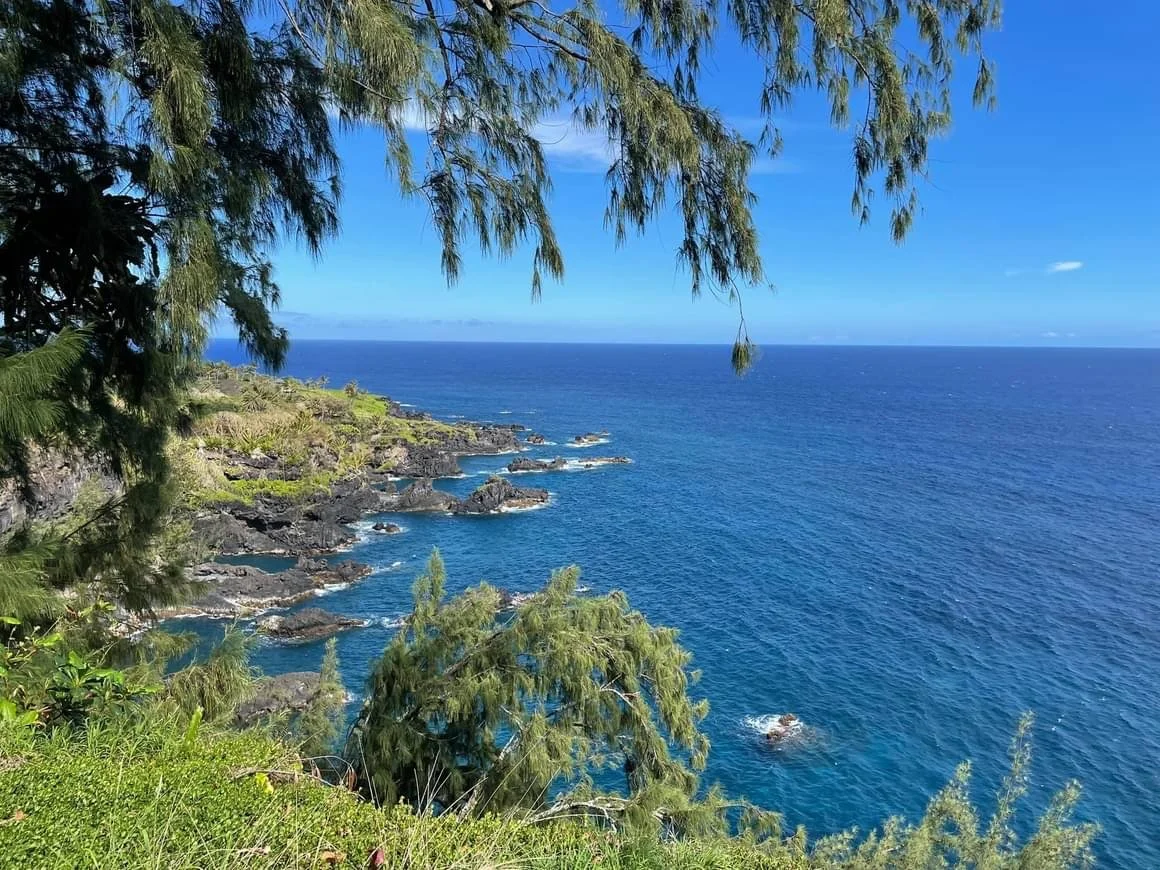
Along the way to the trail, we made many stops for Deb and Arianna to take photos. We were fortunate to get such a clear day, so we could actually see other islands and up toward the summit and all around. I enjoyed getting glimpses of goats every so often, and Arianna was delighted to see cows.
Deb has an app that enables you to do different self-guided driving tours because, at various points, the narrator comes on and say something about historical context or gives you a head’s up that something special is around the corner. This narrator had lots to say about Captain James Cook, who initially came over and called these the Sandwich Isles in recognition of one of his financial supporters (the Earl of Sandwich) and who was stabbed to death by natives when some dispute arose, and also about missionaries coming over and trying to assert dominance over the culture.
That brought up the monarchy (first monarch being King Kamehameha) and the kapu system. The kapu system were laws and rules the people lived by, and I don’t have much to comment about other than that one of the rules was that women couldn’t eat bananas. Like, that was forbidden. Mom would not do well with that rule. It existed because bananas were a masculine thing due to the people believing that eating them gave you some of the gods’ power. And, as is the way with historical traditions, those special powers were reserved for men.
I didn’t retain nearly as much of this information as I did with the whales [also an excursion a few days prior], and now this is the part where things are going to get vague.
The kapu system was abolished later on down the line thanks to the wife of one of the kings. I should say one of the wives; he had 17. Can’t remember her name. Probs wouldn’t be able to spell it if I could. Anyway, she wasn’t able to bear any children, so the king married her younger sister and she was able to. The son born from that relationship was the heir, and the first sister, still favored by the king, became the heir’s guardian and had a very important hand in raising him. She used her influence to get him to lighten up on the kapu, once he was in authority to do so. #BananasforWomen
As for the missionaries, I wasn’t paying much attention to that bit because it’s all kind of the same. Colonialism, disease, viewing anyone “other” as “heathen”...Just sounded like they came to spread Christianity and forgot the grace. There were quite a few little churches along the route, so there’s some evidence of their impact.
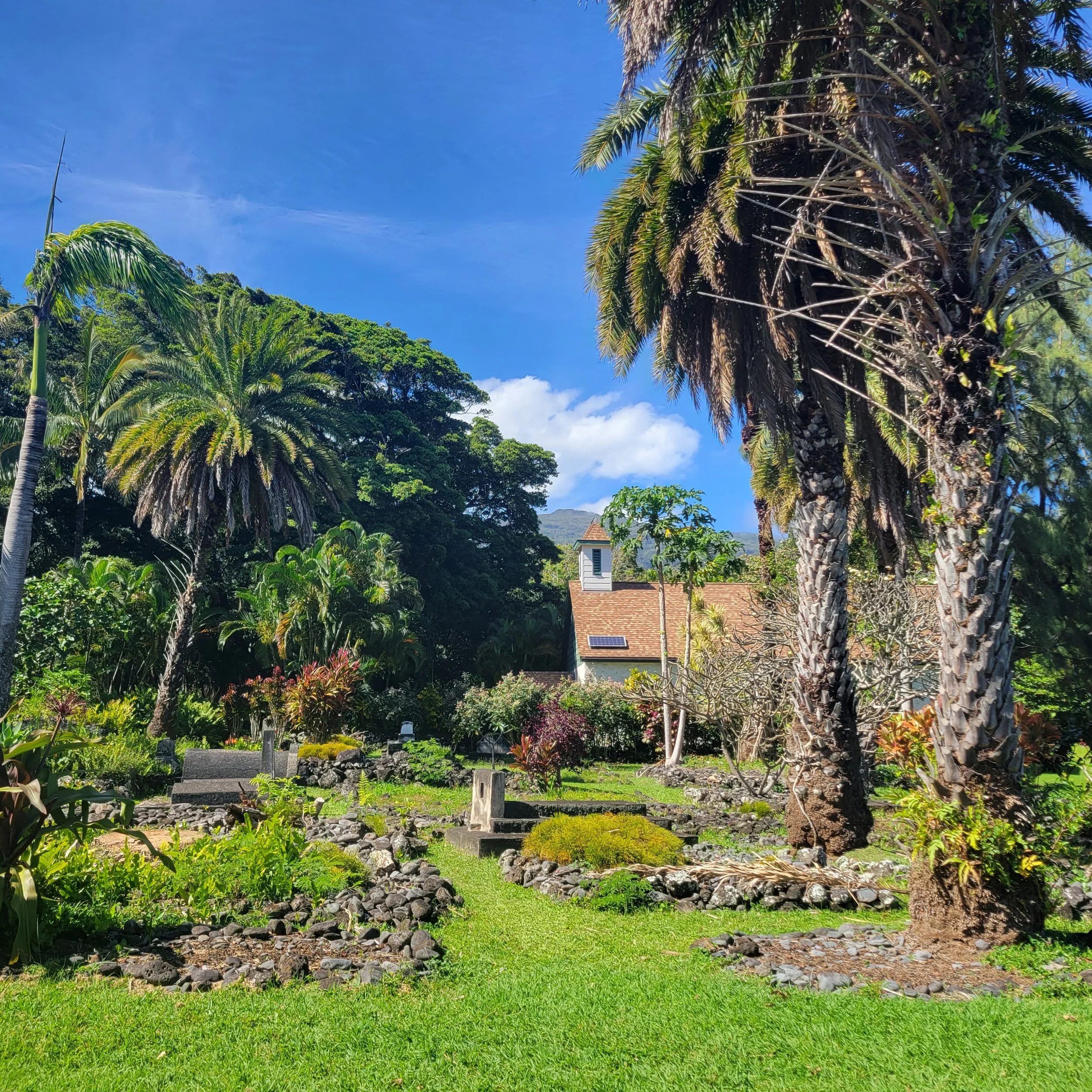
Something I’d asked to see ahead of time was [Charles] Lindbergh’s grave. I’d completely forgotten he was buried here until I was looking at the map and saw it marked. Of course, I had to send a picture to mother. She said it was a full circle moment. Boyhood to burial. It’s had me thinking just how much time I spent at the Lindbergh house/museum. I think, as a man and historical figure, Charles is an interesting character and I don’t really care for him much. But I’m so fond of my time volunteering at the museum.
I can understand, objectively, why he chose to be buried out here, but, personally, I don’t get it. Not when I know first-hand Minnesota woods and the banks of the Mississippi cutting through Little Falls. What a tranquil place to be laid to rest.
Parking and trail access weren’t far from the grave, so that was the next stop. It should be noted that we’d been hours into our drive at this point. By the time we ate a light picnic before starting our hike, it was already 3 p.m.
Light picnic was lovely. Deb and Fred brought turkey/cheese/lettuce sandwiches and clementines. Extra crunch, extra delight, for the lettuce. I was glad we were finally there because hiking was No. 1 on my vacation to-do list. Also, the road isn’t exactly a soothing drive, and there’d been a few tight spots in the first half.
Sitting there, munching on a sandwich that was simply delicious in a kind of unexpected way because it was only a sandwich, I was reminded of an essay in Love and Other Ways of Dying (Paterniti) that was about this trek up mountains in Spain to eat at this world-famous restaurant. The author wrote, “One afternoon Carlos and I took the long drive into the mountains along the Mediterranean toward El Bulli. Up there everyone vanished, the sky came closer, the sea sparkled. If it was treacherous to drive the hairpins and potholes, it was suddenly much easier to breathe. Later, when I asked Ferran to describe the perfect meal, he stressed that there had to be magic in arrival. That it had to be a place hard to get to or somehow earned. That the journey, more than any appetizer or cocktail, would remind you of your hunger.”
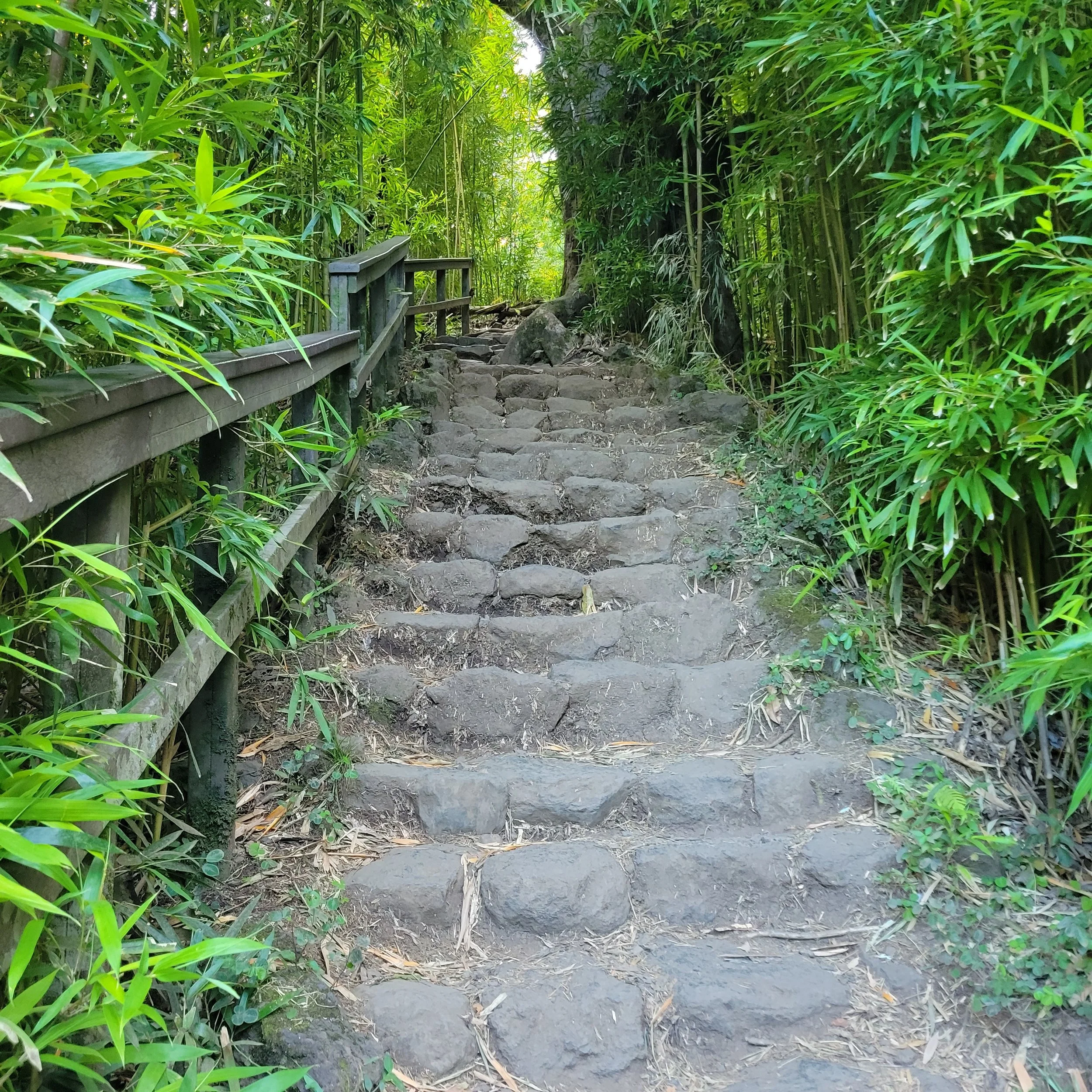
The trail, once we got started, was easy and very defined. You would’ve had to be a total idiot to get lost. I like that.
I must have said, “That’s so cool” about a hundred times during our hike. But that’s because everything was cool! All these great big beautiful trees and lush vegetation and plants you don’t see anywhere unless you go to a special arboretum or something.
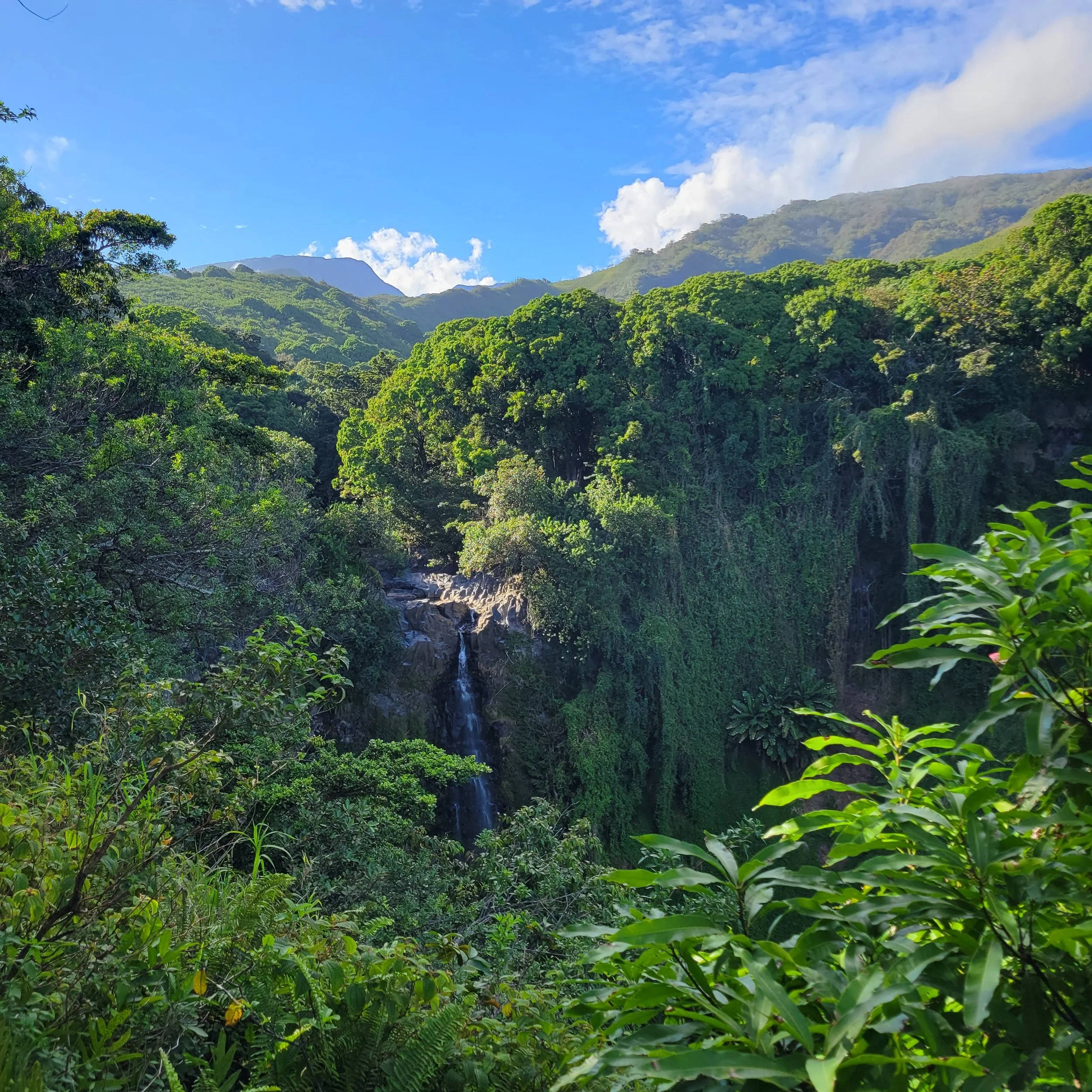
There was one waterfall to see before getting to the big one. It was called Makahiku Falls, and the sign had a phrase in Hawaiian with the translation: He wai makamaka ‘ole. Water that recognizes no friend.
More things were on the sign, but they put that phrase there as a reminder to be respectful of the power of natural forces. And Fred told us about some accidents/deaths happening (these happened at the big falls) because of flash flooding or debris coming down in the water and hitting someone in the head while they stood under the falls. So, actually, getting in the water is not an option, and that feels safe to me.
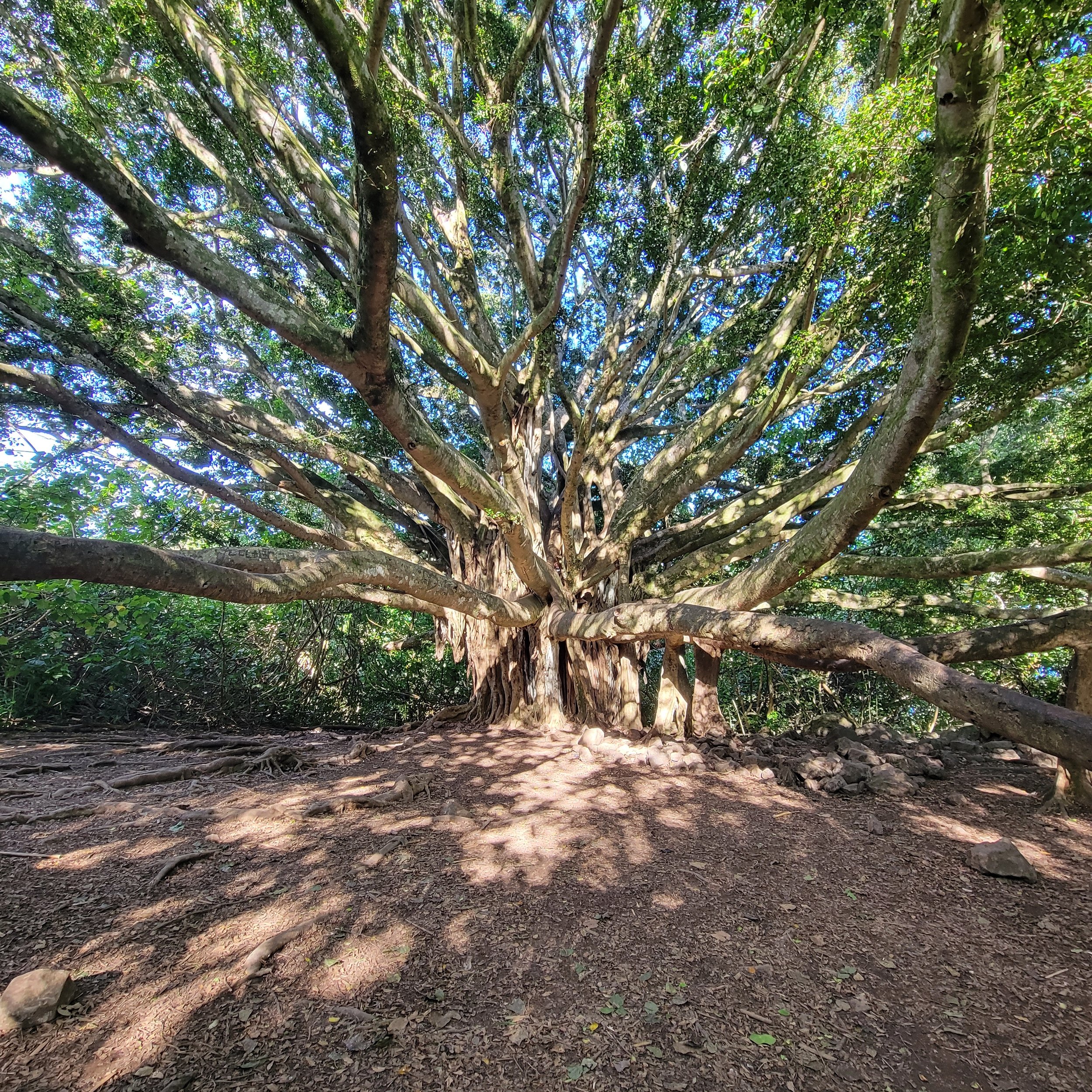
Another resting point along the trail—it should be noted this is called the Pipiwai Trail—was a gigantic banyan tree. Just a beauty. A perfect place for photos, and I got myself hoisted up onto the limbs. Then Deb decided she wanted to get up in the tree, too, so Arianna and Fred had to give her a boost.
And I just love that because climbing trees is something I feel a person should do as long as they are able. Probably because it’s an activity that’s so rooted in childhood. You must be playful and carefree enough to simply want to clamber on up. That’s not something I should like to lose, so I guess the only thing that will keep me from tree climbing will be physical ability. Even then I could be like Deb and get some assistance.
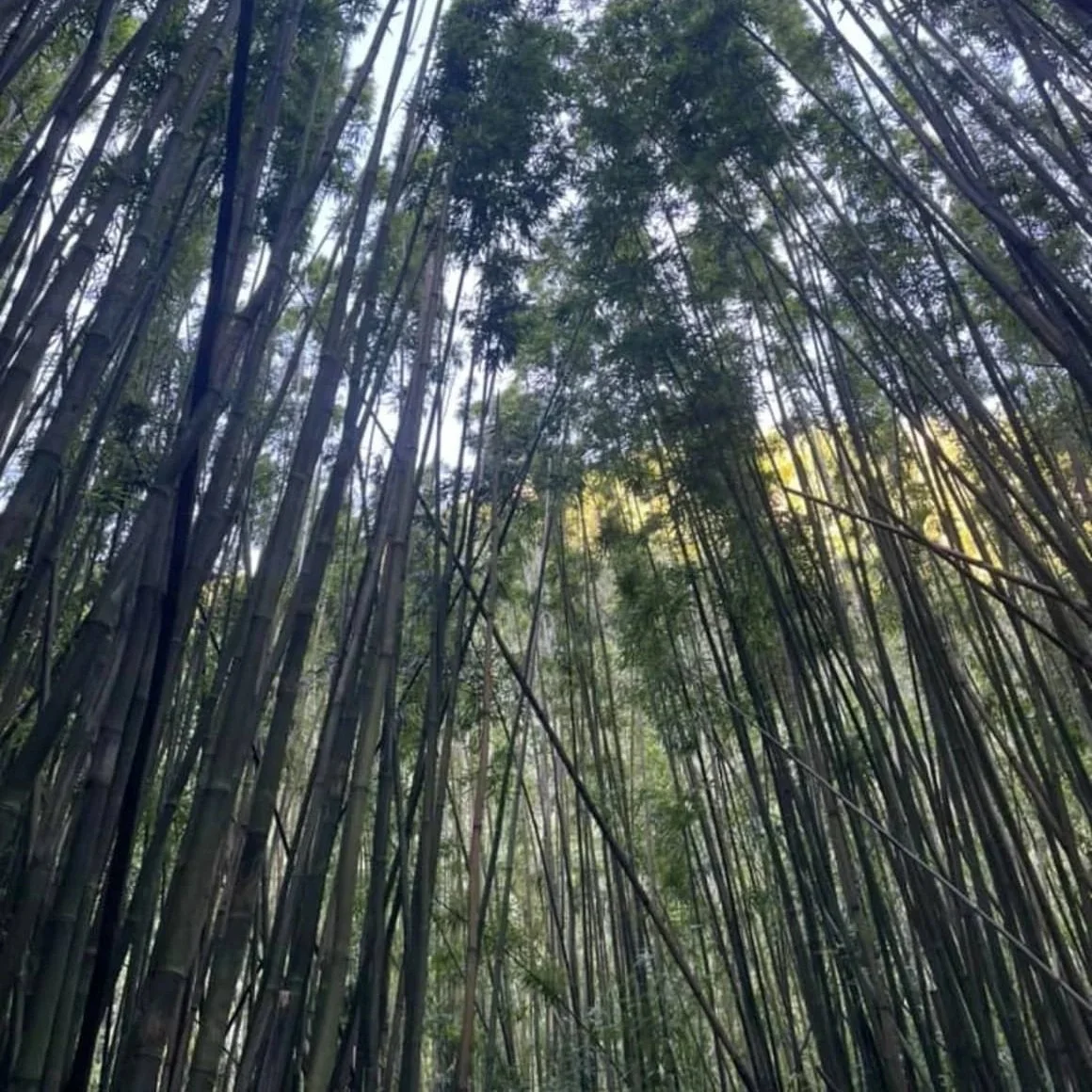
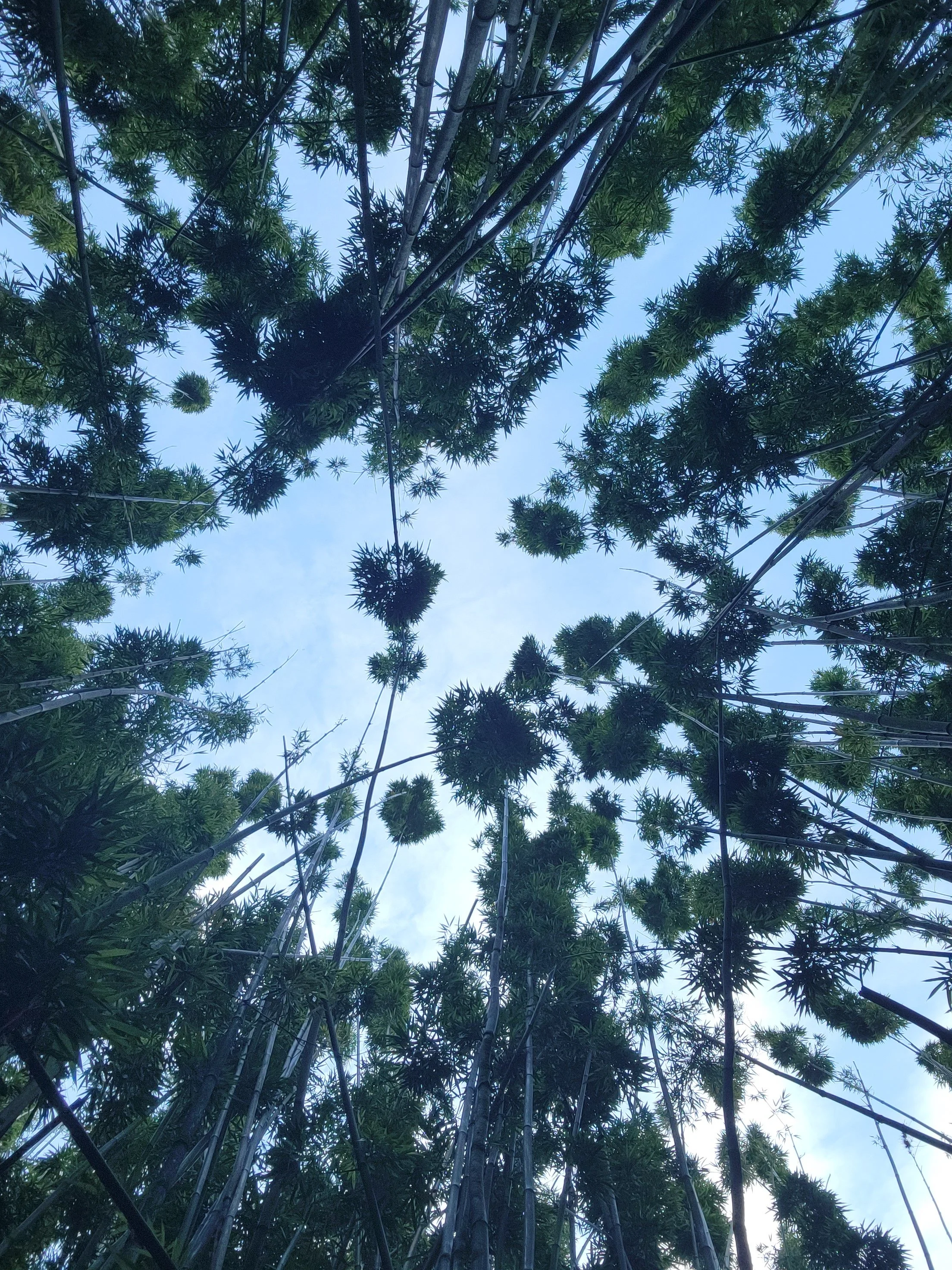
The last stretch of the trail was through a bamboo forest. That’s something I’d never experienced before, and it frightened me a bit when I saw it ahead. Mostly because I couldn’t tell what it was, and, with my non-prescription sunglasses on, it just looked like we were heading straight for a huge shadow. Seriously, so dark. But, of course, once we were in it, it was completely fine. Visibility was perfectly fine.
The bamboo had grown thick and tall around the trail and provided nice shade. Nice and cool in there. When the wind blew, it knocked the stalks against each other for a very distinct genre of mountain music. I really enjoyed this portion of the hike because of its newness to me. Felt like I’d gone off with Indiana Jones.
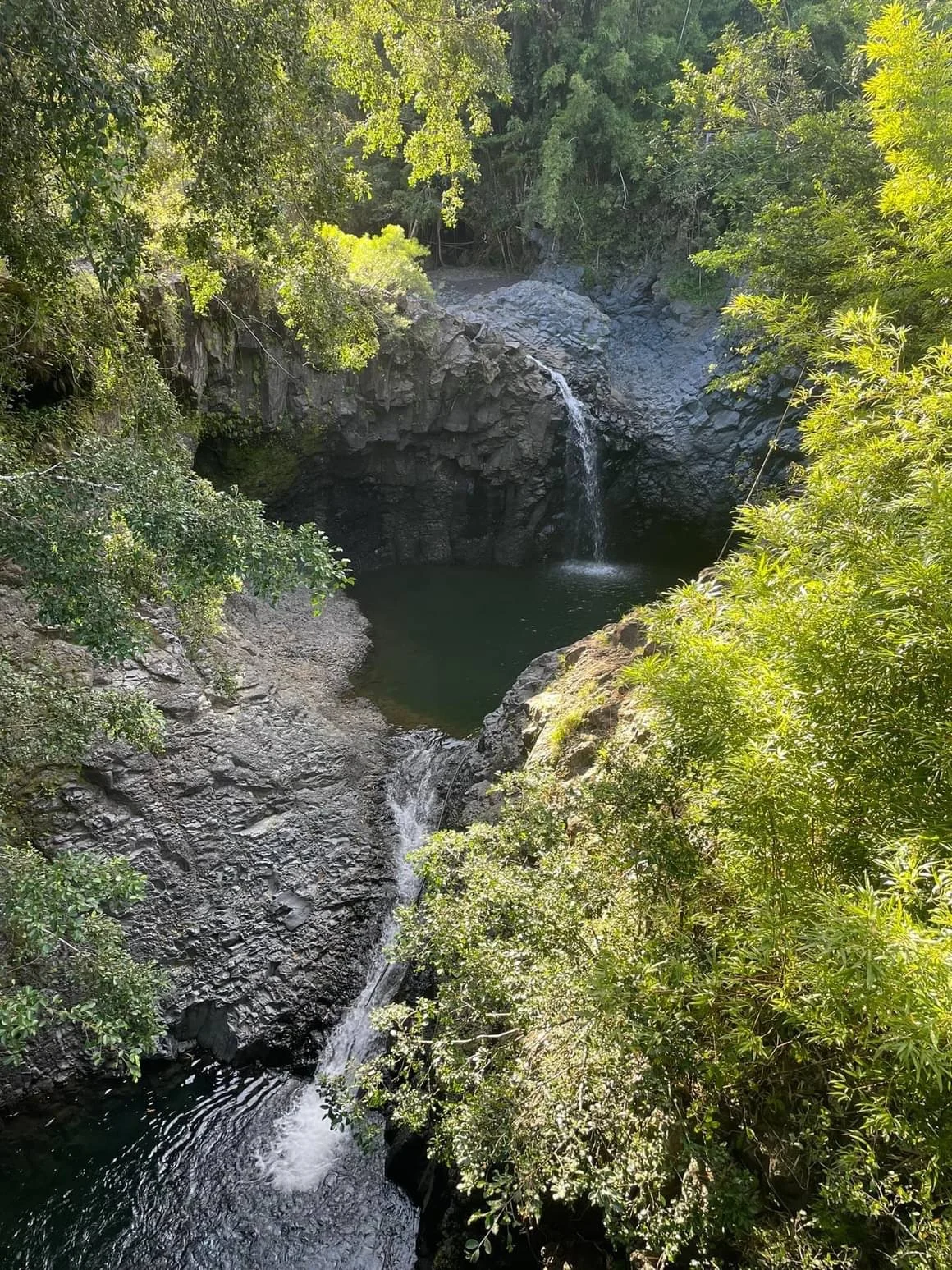
Finally I’ve written us to our arrival at Waimoku Falls. Four-hundred feet tall dropping down a lava rock wall. Absolutely gorgeous. The first thing I did, after snapping a photo, was dip my hands in a pool of running water to cool off and enjoy the refreshing mountain water. Not that the hike was too strenuous or anything; it’s just warm, warm, warm, and a touch humid.
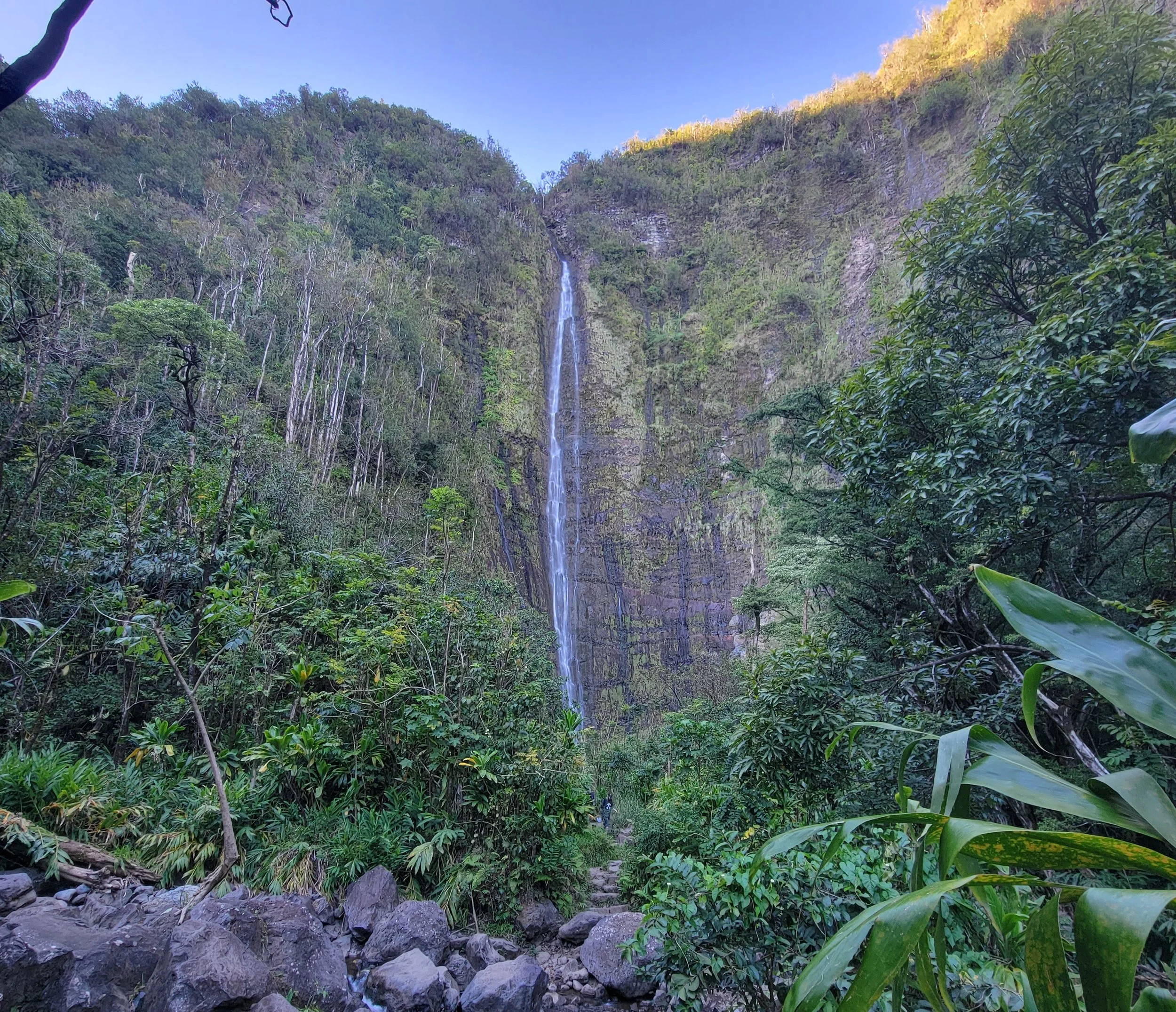
Apparently, Waimoku is connected to the Seven Sacred Pools, though I’m fairly certain Deb said there are more than seven. For naming purposes, it is what it is. All of this is actually within what is called the ‘Ohe’o Gulch. ‘Ohe’o means “something special” and I suppose that’s accurate from the bamboo forest alone.
We remained safe (good for us) and made the return portion of the trek in good time. Just as cool on the way in as on the way out. Would recommend this excursion. In total, it’s a very basic four miles, and Waimoku is a lovely destination.
As for getting back to Kā’anapali…
Instead of taking the same route we’d driven in, Fred decided we’d go the other way—which meant we unexpectedly ended up driving the entire Road to Hana.
I’m glad we went that way because I didn’t think it would have been any fun at all to traverse the Back Road in the dark. Not that this other half was loads of fun—there were a few spots I thought, “Oh, golly, someone’s gonna have to call my mom and inform her there’s been an accident”—but it quickly turned into two lanes.
All in all, we survived the Road to Hana, coming out just in time to stop by the Paia Fish Market before they closed. I’d made a request to stop for fries at some point on the road, and Fred had said, “I think we can manage that.” Mission accomplished at the market. Then on home for some much-needed rest. It was the latest we’ve been out all vacation.
This just might be my favorite day so far. It’s in the running with DAY FIVE [the whale watching excursion], but I can sense it will probably pull ahead as I continue to reflect. Not only did we have a brilliant adventure, but my heart is full from the generosity of Deb and Fred. No questions about taking two near-strangers out for the day, sharing fun facts and food. Getting us to French fries. Very generous.
So, a good day with an excellent adventure and fun people to share it with.